When symptoms become your normal
The diagnosis of coeliac disease had a huge impact on both my life and my family’s life. A couple of years earlier, we had already been through an incredibly difficult period after losing our daughter shortly after she was born at just five weeks old.
I put many of my symptoms down to grief after such a devastating loss. The fatigue, exhaustion and brain fog felt understandable after everything we had been through. My wife and I then welcomed our son in 2014, and I connected many of my symptoms to becoming a new dad and the life changes and sleepless nights that came with it.
In many ways, my symptoms were masked.
Over time, the symptoms became harder to ignore. Alongside the fatigue and brain fog came bloating, stomach cramps and diarrhoea. Eventually, after seeing a different GP, I had a blood test, followed by a biopsy a couple of months later, which confirmed coeliac disease.
The emotional impact of diagnosis
At first, the diagnosis had a huge impact on my mental health.
Before diagnosis, I had complete food freedom. I could eat where I wanted, grab food on the go and enjoy spontaneous meals or drinks with friends without thinking twice. Suddenly, everything felt different.
Between my positive blood test and biopsy, I started researching coeliac disease, largely because my GP introduced me to Coeliac UK in those early conversations. As someone who had always been active on social media, I quickly found the charity online and it became a gateway to information, support and reassurance.
Once my biopsy confirmed the diagnosis, I set myself a date to go gluten free so I could prepare mentally for the change ahead.
I often compare the first few months after diagnosis to a period of grieving.
I withdrew from social situations because the anxiety around eating out felt overwhelming. Cross-contamination caught me completely off guard and I quickly realised the impact even a crumb of gluten could have.
I remember going out with friends and feeling uncomfortable when someone questioned why I was drinking a gluten free beer.
Before diagnosis, my favourite food had always been Chinese. One of the hardest moments for me was speaking to my local takeaway, who we had become close to over the years, only to find out they couldn’t safely cater for me anymore.
Eating out suddenly felt difficult and isolating. I remember leaving restaurants after being told they couldn’t guarantee a coeliac-safe environment and feeling like a burden to my family.
The first Christmas after diagnosis also felt scary. All these small moments brought sadness, frustration and confusion as I tried to navigate an entirely new world.
This is what I now recognise as the invisible load of coeliac disease.
No one could see the constant thinking, planning and anxiety happening in the background. I have always been a quieter person who struggled with asking lots of questions in restaurants, but now I had to push myself to speak up and advocate for my health.
There was a weight I was carrying that no one else could see.
My wife and extended family were incredibly supportive during this time. They took the time to learn about coeliac disease and Coeliac UK’s information became invaluable for helping us all better understand the condition.
Even so, I still felt there was a wider lack of understanding around coeliac disease. Most people were curious and wanted to learn more, but there were still misconceptions and moments where I felt misunderstood.
What really stood out to me after diagnosis was the lack of psychological support.
My conversations with healthcare professionals understandably focused on the diet and my physical health, but nobody really asked how I was coping mentally with such a life-changing diagnosis.
No one asked:
“How are you coping emotionally?”
“Do you need support adjusting to this huge change?”
At times, I felt like I was carrying the invisible load alone.
Carrying the invisible load
This is why research exploring the psychological impact of coeliac disease is so important.
Dr Rosie Satherley’s work exploring the invisible load of coeliac disease and the importance of psychological support, alongside dietetic care, really resonated with me and reflected many of my own experiences.
Coeliac UK funded research explores the psychological impact of coeliac disease
Finding support and community
Over time, I began to seek support in other ways.
I continued following Coeliac UK on social media and learned more about the gluten free diet, including labelling, myth busting and cross-contamination awareness. Resources such as the Venue Guide, Home of Gluten Free Recipes, membership and the Live Well Gluten Free app helped me gain confidence.
The app especially helped me better understand food labels and what I could and couldn’t eat. It also encouraged me to look beyond the free from aisle, which was another overlooked aspect of the invisible load.
Financially, diagnosis also had an impact on our family, particularly with a young child at home.
Social media and the wider gluten free community also became incredibly important to me. Seeing Coeliac UK Ambassador Becky Excell, Sarah Howells (@gfblogger) and other creators sharing positive gluten free content helped shift my mindset.
They showed me that living gluten free could still be enjoyable, exciting and social.
What once felt isolating slowly started to feel like a community.
I quickly realised that living with coeliac disease is about much more than food.
Ten years later
Ten years on from diagnosis, I finally feel far more comfortable and accepting of living with coeliac disease.
Life also looks very different now. After diagnosis, my wife and I welcomed our daughter in 2018, something that brought a great deal of happiness to our family after such a difficult period earlier in our lives.
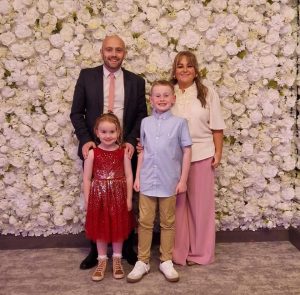
Derek and family, 2025
One of the ways I coped was by trying to help others.
I started my own social media pages sharing gluten free finds, tips and baking attempts (many of which were complete disasters). But creating content and connecting with others helped me feel less alone.
That eventually sparked a bigger ambition. A few years after diagnosis, I decided to return to education and study marketing. My goal was simple: I wanted to work for Coeliac UK or within the gluten free industry.
In 2022, that goal became reality when I joined Coeliac UK as Social Media Officer.
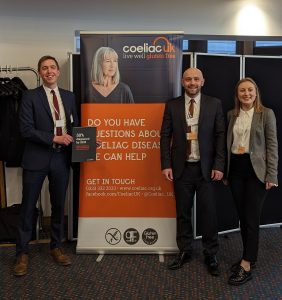
Derek representing Coeliac UK At The Scottish Parliament, Holyrood in 2023
My goal now, both personally and professionally, is to help support our community.
I may not be a mental health professional, but I understand the invisible load, and I want to help make it feel lighter for others, especially those newly diagnosed and young people growing up with coeliac disease.
Two members of my own family were also diagnosed in the years after me, which reinforced just how important awareness and diagnosis are.
We need to help find the 64% of people in the UK who remain undiagnosed.
That’s why research, awareness and fundraising matter.
Research projects such as Dr Rosie Satherley’s are hugely important in helping improve understanding of the psychological impact of coeliac disease and the support people need beyond the gluten free diet.
This is also why Coeliac UK’s fundraising activities, from raffles and lotteries to challenge events and campaigns, play such an important role in helping drive progress and support the community.
Ten years on, I feel stronger.
Joining my local gym and focusing on my fitness helped rebuild my confidence and improve my health after diagnosis. It also introduced me to another supportive community which helped lighten the invisible load.
Eating out also feels easier now thanks to Gluten Free Accredited venues and local businesses that have embraced the gluten free community. Over time, I’ve become more confident advocating for myself too, although it has taken years to reach that point.
The support of the community has made a huge difference.
One thing is certain: I’ll continue fighting for people living with coeliac disease, both personally and through my role at Coeliac UK, to help make the invisible load feel lighter for others.
Because sometimes, simply knowing someone else understands the feeling can make all the difference.
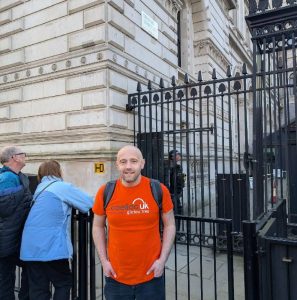
One of Derek’s proudest moments fighting for our community by attending the Downing Street petition hand in to protect gluten free prescriptions in March 2025.