Current research projects
Here you can read about the research projects that we are currently funding both in the UK and internationally. Funding research is important so that we continue to advance our understanding, ensure no life is limited by coeliac disease and ultimately to one day see a world without coeliac disease.
You can read about the projects that we’ve previously funded here.

University of Bristol and University of Sheffield: Exploring trends in coeliac disease and inflammatory bowel disease across the UK
Project Title: Incidence, prevalence, and comorbidities of coeliac disease and inflammatory bowel disease: an updated national population-based study
Principal Investigators: Dr Martha Elwenspoek and Dr Mohamed Shiha
Institution/s: University of Bristol and University of Sheffield
Grant awarded: £106.5k
Project start: July 2026
Project duration: 16 months


What is the aim of this project?
Coeliac disease and inflammatory bowel disease (IBD) are lifelong conditions that affect the gut. Diagnoses of both are increasing, but it is unclear whether this reflects a true rise in the number of people affected or improvements in diagnosis. Despite this, many people still experience long delays before receiving the correct diagnosis. Understanding how many people are affected, how many people remain undiagnosed, who is most at risk of developing these conditions, and where delays in healthcare occur is essential to improving diagnosis and care.
In 2019, Coeliac UK and Crohn’s & Colitis UK jointly funded a research project to provide information on the diagnosis of coeliac disease and IBD. Since then, patterns of diagnosis and healthcare have continued to evolve, making it important to update this information. Therefore, the two charities are once again working together to fund a new project led by Dr Martha Elwenspoek and Dr Mohamed Shiha to provide up-to-date reports on coeliac disease, IBD, and related conditions across the UK.
Using anonymous NHS GP and hospital health records from the Clinical Practice Research Datalink (CPRD), the researchers will investigate:
- How many people are living with coeliac disease, dermatitis herpetiformis, gluten ataxia and IBD (Crohn’s disease, ulcerative colitis, microscopic colitis and IBD indeterminate).
- How many people are newly diagnosed with each condition each year.
- Whether diagnosis rates differ by age, sex, ethnicity or deprivation index.
- Whether people had previous diagnoses of irritable bowel syndrome (IBS).
- How often coeliac disease occurs alongside migraines, Type 1 diabetes mellitus or autoimmune thyroid disease.
This research will provide valuable insights into coeliac disease, IBD and related conditions across the UK, and will be used to help improve awareness, inform future advocacy planning, and support efforts to ensure people get the right diagnosis sooner.
University of Oslo: Studying proteins to understand ongoing symptoms and help improve coeliac disease care
Project title: Tissue Proteomics to combat coeliac disease
Principle Investigator: Professor Ludvig Sollid
Institution/s: University of Oslo
Grant awarded: £603k
Project start: September 2026
Project duration: 3 years
Professor Ludvig Sollid is a Professor of Medicine (Immunology) at the University of Oslo, and Senior Consultant at Oslo University Hospital. His research has made significant contributions into understanding coeliac disease, focusing on the genetic and environmental factors that drive disease development.
What is the aim of this project?
This project aims to use protein levels to further understand and monitor ongoing symptoms in patients with coeliac disease. Previous research has suggested that while people often react well on a gluten free diet, some low level inflammation can persist, which might be the reason for ongoing symptoms and may even increase the risk of long term complications (including rare cancers). Unfortunately, standard microscope assessments cannot see these low levels. This study aims to use proteins as signals of inflammation, offering a new objective way to monitor gut inflammation.
This project aims to further explore:
- The possibility of blood based markers to help monitor gut inflammation non-invasively
- Assess the harm that tiny amounts of gluten can cause in the gut
- Provide clear insight into the role that immune cells have in causing the persisting low level inflammation
The outcomes of this project aim to help inform clinical management, safety advice and therapeutic development.
The University of Cambridge: Improving diagnosis of coeliac disease
Project title: Validation of coeliac disease specificity of four candidate T-cell receptor gamma sequences with high diagnostic potential.
Principle Investigator: Professor Elizabeth Soilleux
Institution/s: University of Cambridge
Grant awarded: £20k
Project start: September 2026
Project duration: 1 year
Professor Elizabeth Soilleux’s research focuses on immunology and histology, with a particular interest in the analysis of T cells in diagnostics. She is a Professor and an honorary consultant in histopathology and founded Lyzeum Ltd which drives the rapid advancement of digital image analysis for the diagnosis of immunological conditions, primarily coeliac disease.
What is the aim of this project?
There is still room to improve how accurately we diagnose coeliac disease. This project aims to explore the possibility of using the specific makeup of T cells to help improve diagnostic methods.
In coeliac disease, immune cells called T cells damage the small bowel. Each T cell has a unique receptor that determines the type of molecules it can recognise. The research team has identified four receptors that are numerous in coeliac disease biopsies but rarely in healthy controls. The project aims to validate these results and determine use in identifying coeliac disease patients with high accuracy. They also aim to map the location of these cells within the small bowel to provide further clues on their function. This study could provide the basis for a more objective test for identifying coeliac disease, even in patients who currently follow a gluten free diet.
Leiden University Medical Centre: Understanding what triggers coeliac disease onset
Project title: Infections as early triggers of loss of gluten tolerance in genetically at-risk children.
Principle Investigator: Dr Vincent van Unen
Institution/s: Leiden University Medical Centre
Grant awarded: £38.5k
Project start: April 2026
Project duration: 18 months
Vincent van Unen leads an independent research group at Leiden University Medical Centre (LUMC), focusing on mucosal immunology, with an emphasis on immune-mediated inflammatory disorders in human tissues. His work has previously been supported by a Marie Sklodowska-Curie Postdoctoral Fellowship and LUMC Started Grant.
What is the aim of this project?
The aim of this project is to determine the possible involvement of infections in the onset of coeliac disease. People with coeliac disease usually carry ‘risk genes’, however, most people with these genes never develop the disease. This suggests there is another trigger involved that turns the immune system against gluten.
This study proposes that certain infections ‘train’ the immune system in the wrong way, causing immune cells to think gluten is a threat. The research group will use a specialised technique to identify coeliac disease associated infections. They will then test whether the immune cells are reacting to the microbes and gluten in the same way. These findings would help clarify if specific infections can act as early triggers for coeliac disease, potentially providing an avenue for targeted preventative strategies.
The University of Dundee: Enzyme inhibitors as a potential treatment for coeliac disease
Project title: PIM kinase inhibitors as a potential treatment for coeliac disease.
Principle Investigator: Dr Mahima Swamy and Dr Hugo Penny.
Institution/s: The University of Dundee and the University of Sheffield.
Grant awarded: £250k.
Project start: March 2024.
Project duration: 3 years.
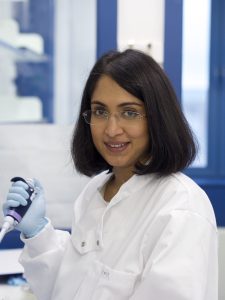
Dr Mahima Swamy has had an extensive career in research relating to the intestinal immune system and has previously received grants for her work from organisations such as the Medical Research Council and Wellcome Trust. Dr Swamy’s lab in Dundee will collaborate with Dr Hugo Penny, a gastroenterologist and National Institute of Health and Care Research (NIHR) Academic Clinical Lecturer and Professor David Sanders, Consultant Gastroenterologist, both based in Sheffield and part of the National Centre for Refractory Coeliac Disease.
What is the aim of this project?
The project aims to investigate how a certain group of proteins, called enzymes, trigger immune cells to damage the tissue that lines the gut. They’re going to test if blocking these enzymes stops the immune cells from damaging the gut lining. The project will help us to understand why the gut is damaged in coeliac disease and may generate new ideas to treat coeliac disease. Medications that block these enzymes are already in clinical trials for certain types of cancer. The findings from this research may show whether these medications could also be used to treat people living with refractory coeliac disease and prevent symptoms such as nausea and vomiting that occur when someone with coeliac disease is accidentally exposed to gluten.
Dr Swamy said: “When I present my research findings on coeliac disease, many patients tell me they’d be much happier if they could avoid feeling sick when they accidentally eat gluten. I’m excited by the possibility that this idea that was born out of basic research findings in my lab may eventually lead to a potential treatment for coeliac disease. I am thrilled to partner with Dr Penny and Professor Sanders from the National Centre for Refractory Coeliac Disease in Sheffield, and with Coeliac UK, to work towards making this possibility a reality.”
University of Oxford: Rogue cell research to better understand coeliac disease
Project title: Determining the antigen-specificity and function of CD8+ TCRαβ+ and TCRγδ+ intraepithelial lymphocytes in coeliac disease.
Principle investigator: Dr Michael FitzPatrick.
Institution: University of Oxford.
Grant awarded: £250k.
Project start: July 2024.
Project duration: 3 years.
Dr Michael FitzPatrick is a Consultant Gastroenterologist at Oxford University Hospitals, leading the coeliac disease clinic at John Radcliffe Hospital and a scientific researcher in immunology in the Translation Gastroenterology Unit at the University of Oxford where his lab focuses on disease mechanisms in coeliac disease.
What is the aim of this project?
The aim of this project is to understand the behaviour of immune cells that ‘go rogue’ in coeliac disease. It is well known that cells in the gut are designed to fight infections including destroying any infected cells and repairing any tissues that are damaged as a result of the immune response. In people with coeliac disease, these immune cells are wrongly activated to destroy healthy cells in the lining of the gut, in the presence of gluten. We know that this happens, but it is still not entirely understood why these cells respond specifically to pieces of gluten.
Previous research by the team has suggested that there are cells in the gut that have special receptors that recognise proteins from gluten and signal the body to produce an immune response as if a threat is present. This project is designed to test that theory.
The Oxford University research team plan to:
- Extract these receptors from gut samples from patients with coeliac disease Identify what these receptors look like by sequencing their genetic material.
- Investigate how and where these receptors interact with other immune cells in the gut, using a miniature model of the gut called an organiod which is grown in the lab from real human tissue.
- Understanding all of this could provide us with the information we need to treat or potentially even prevent coeliac disease.
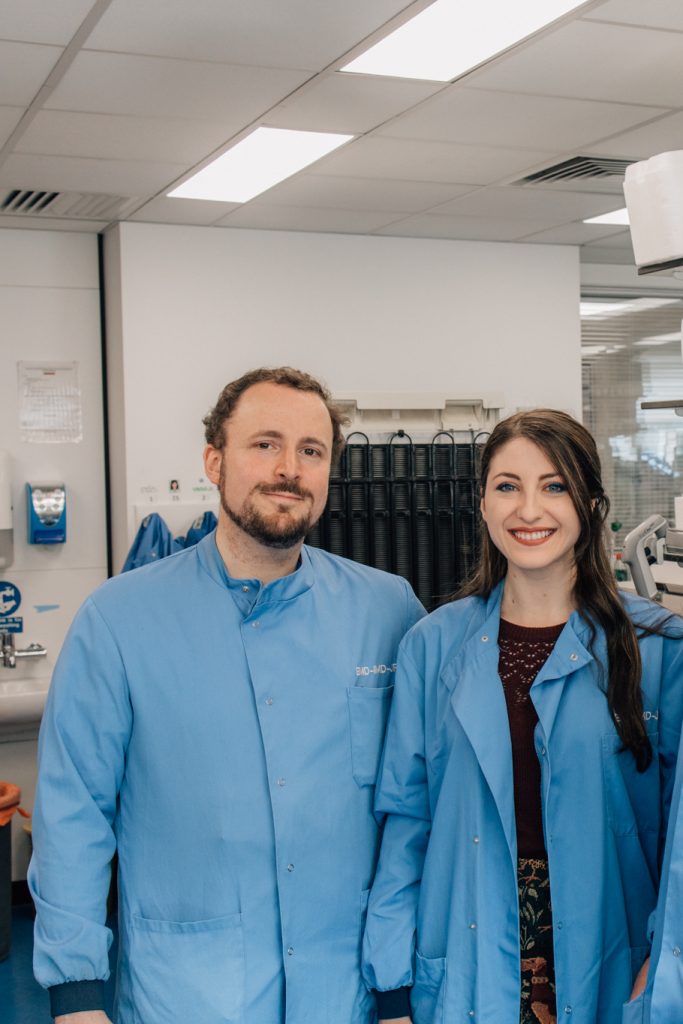
Understanding immune cell interactions in the gut
Project title: Understanding immune-parenchymal cell interactions in active and refractory coeliac disease through spatial analysis approaches.
Principle Investigator: Professor Paul Klenerman.
Institution: The University of Oxford.
Grant Awarded: £250k.
Project Start: October 2023.
Project Duration: 3 years.
Professor Paul Klenerman is an immunologist and Sidney Truelove Chair of Gastroenterology at the University of Oxford. His research has made significant contributions to the world of immunology, particularly in relation to viruses and vaccines.
What is the aim of this project?
Based on previous investigations, the research team believe that the different cell types involved in coeliac disease work together as functional units within the gut to create the inflammatory response in coeliac disease. They want to develop a greater understanding of how these functional units operate. They will investigate where specific cells in the gut are found and how they interact with other cells nearby. They will determine how these cell to cell interactions change in the presence of gluten. They will study samples from people with treated coeliac disease, people with active coeliac disease and people with refractory coeliac disease.
The project will be using a relatively new technique in molecular biology called spatial transcriptomics. This technique looks at gene expression and will therefore allow the researchers to pinpoint exactly where specific cells are located in the gut and how they are interacting with one another in the context of coeliac disease.
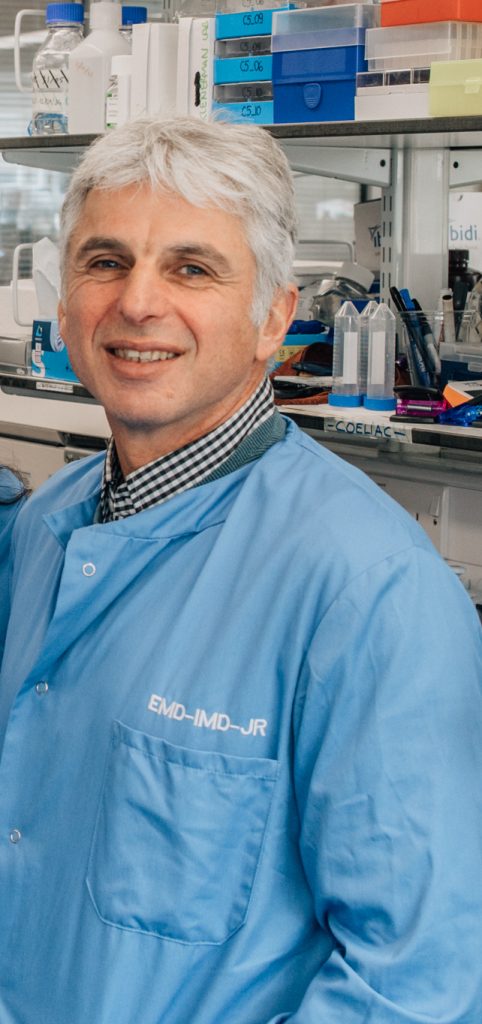
The University of Sheffield: Improving the diagnosis and management of gluten ataxia
Project Title: Improving the diagnosis and management of gluten ataxia.
This project is being funded by Coeliac UK, Ataxia UK, the Sheffield Hospital Charity and the Greaves and Withey Foundation.
Principle Investigator: Professor Marios Hadjivassiliou.
Institution: The University of Sheffield.
Grant Awarded: £157k.
Project Start: October 2023
Project Duration: 24 months.
Professor Marios Hadjivassiliou is a Consultant neurologist and the Director of the Sheffield Ataxia Centre – one of just two national ataxia centres in the UK, that cares for over 2500 ataxia patients. Professor Hadjivassiliou is also one of the founder members of The Sheffield Institute of Gluten Related Disorders, established over 10 years ago.
What is gluten ataxia?
Gluten ataxia is a neurological disorder that causes a loss of coordination, poor balance, slurring of speech, a tendency to fall and, if left untreated, wheel-chair dependency. It is caused by damage to the cerebellum in the brain and is triggered by gluten consumption. The condition can be stopped from progressing if it is detected early, and the patient follows a strict gluten free diet. Late diagnosis causes permanent neurological disability. For more information on gluten ataxia, please see our information pages on neurological conditions linked to coeliac disease.
You can also read about the projects that we’ve previously funded here.