Our impact on food labelling
How more than three years of Coeliac UK advocacy helped secure international recognition of coeliac disease and important changes to ‘may contain’ labelling.
After over three years of sustained advocacy and technical work, Coeliac UK has helped achieve important changes to international food labelling standards for people with coeliac disease.
For the first time, a definition of coeliac disease has been included in the main international standard for general food labelling developed by Codex Alimentarius, the UN-backed international programme that sets global food standards. New international guidelines for determining the need for precautionary allergen labelling (often seen on products as ‘may contain’ statements) now include a specific ‘reference dose’ for gluten to be considered in risk assessments.
These are significant steps towards clearer and more consistent food labelling. Together, they strengthen an important international foundation for better decisions about when precautionary warnings are needed; and formally recognise that the needs of people with coeliac disease are different from those of people with a wheat allergy.
Through our own advocacy and technical work, Coeliac UK made sure the needs of people with coeliac disease were kept at the heart of discussions. Additionally, we are proud to have worked through the Association of European Coeliac Societies (AOECS) and alongside the UK Food Standards Agency (FSA), experts, consumer organisations and the food industry to ensure that people with coeliac disease were properly considered as the international standards developed.

What could this mean for people with coeliac disease?
A ‘may contain’ statement is an important factor when deciding whether a product is safe to eat. But precautionary warnings have not always been determined or applied consistently.
The new Codex guidelines establish an evidence based, standardized and consistent approach to precautionary allergen labelling. They establish several important principles:
‘May contain’ labelling should be based on risk
Businesses should use a precautionary statement only when a risk assessment shows that it is needed.
Coeliac disease and wheat allergy should be treated differently
The new guidelines recognise that they are different conditions and therefore use separate reference doses in risk assessment: 5 mg of total wheat protein for wheat allergy and 4 mg of total gluten from wheat, barley and rye combined for coeliac disease. The reference dose is an amount consumed on a single eating occasion, associated with no appreciable health risk to the relevant sensitive population.
Gluten free products should not carry contradictory warnings
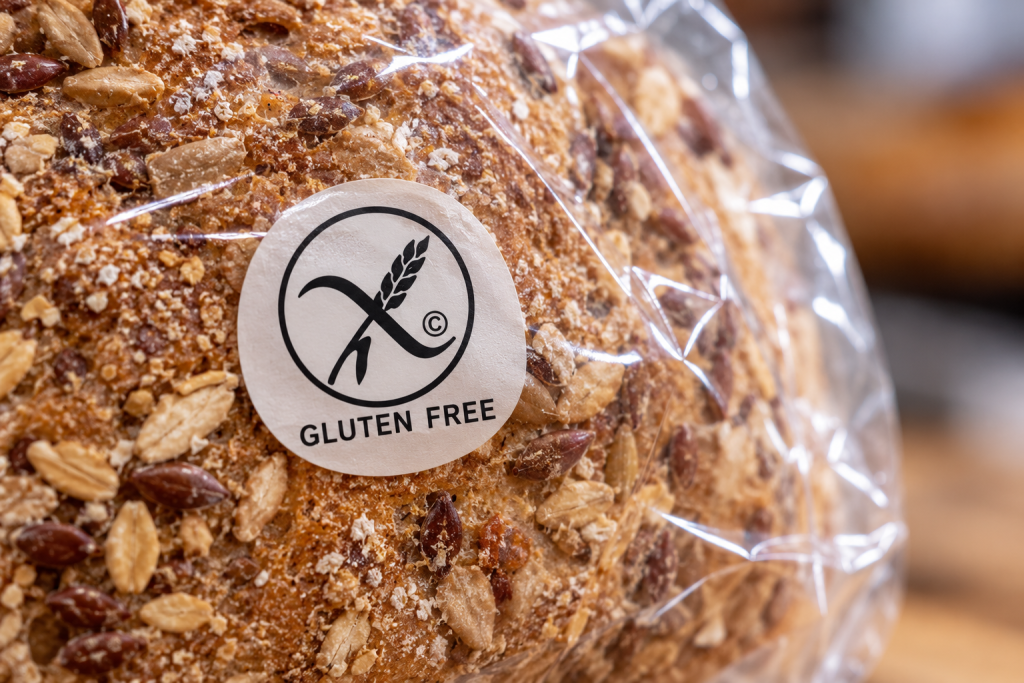
The guidelines make clear that a product should not be labelled both ‘gluten free’ and ‘may contain wheat, barley or rye.’
Codex develops international standards that influence food regulation and industry practice around the world, but the new guidance now needs to be considered and implemented by regulators and businesses. Coeliac UK will continue working to help make that happen.
Evolution of the standards
2023
-
Our involvement began in 2023 at the 47th session of the Codex Committee on Food Labelling, the committee responsible for international food-labelling standards. Emily Hampton, Coeliac UK’s Head of Food Policy, attended on behalf of AOECS, which represents coeliac organisations across Europe.
-
At that meeting, Codex agreed for the first time to include a definition of coeliac disease within its main international standard for food labels.
That was important because it formally recognised that food labelling rules need to consider people with coeliac disease, whose response to gluten is different from an allergic reaction to wheat.
-
Emily also raised concerns that the emerging rules for precautionary allergen labelling did not properly address coeliac disease or explain how ‘may contain’ warnings should work alongside gluten free labelling. Those concerns were formally recorded and carried forward as the work developed.
2024
-
When Codex met again in 2024, it agreed that the word ‘gluten’ could be added after the name of the cereal on food labels (for example, ‘wheat (gluten)’) helping to make information clearer for people with coeliac disease.
-
Separately, the developing standard for precautionary labelling included reference doses for allergens such as wheat but did not include a separate amount for gluten from wheat, barley and rye. Coeliac UK helped explain why this mattered.
Wheat allergy and coeliac disease are not the same condition. Wheat allergy involves an allergic reaction to proteins in wheat. Coeliac disease is an autoimmune condition in which the gluten proteins from wheat, barley and rye can damage the gut, sometimes without causing immediate symptoms. Treating the two in the same way would therefore not properly reflect the needs of people with coeliac disease.
-
Codex kept the issue open and asked experts from the Food and Agriculture Organisation of the United Nations (FAO) and World Health Organisation (WHO) to recommend an appropriate reference dose for gluten.
2025
Between 2024 and 2025, we continued making the case for change. Coeliac UK responded to consultations, produced technical papers and briefings, and worked with the FSA – which is responsible for food safety and standards in England, Wales and Northern Ireland – AOECS, food businesses and international experts.
-
We argued that precautionary allergen labelling should be based on a proper assessment of risk and used only when necessary. We also called for a separate reference dose for gluten and for clear rules preventing a gluten free claim from appearing alongside a relevant ‘may contain’ warning.
-
Ahead of an FAO/WHO expert meeting in Rome in November 2025, we submitted a position paper and spoke directly with some of the experts taking part.
We shared data from our Coeliac Diet and Nutrition Survey (CDNS), collected from adults living with coeliac disease in the UK about their dietary habits and portion sizes. This data was explored alongside other databases and research to help determine the appropriate reference dose for gluten for people with coeliac disease. Following that meeting, the experts recommended a reference dose of 4mg of gluten from wheat, barley and rye combined. This is an amount of gluten per eating occasion.
2026
-
As the final standard was being developed in early 2026, Coeliac UK continued scrutinising the detail. An early version of the standard containing the new 4mg gluten reference dose accidentally omitted the separate reference dose required for people with wheat allergy.
-
We spotted the problem and raised it with the FSA, who informed the Codex working group. We explained why both values were needed because the two conditions are different. The final guidelines now include:
- 5mg of wheat protein as the reference dose relevant to wheat allergy
- 4mg of gluten from wheat, barley and rye combined as the reference dose relevant to coeliac disease.
They also state that precautionary labelling should be based on risk assessment and make clear that a product should not be labelled both ‘gluten free’ and ‘may contain wheat, barley or rye’. -
The guidelines were formally adopted by the Codex Alimentarius Commission on 6 July 2026.
What is a reference dose?
A reference dose is an amount used as part of a risk assessment to help determine whether a precautionary label is needed.
For gluten, the new Codex guidelines use a reference dose of 4mg of gluten from wheat, barley and rye combined.
This should not be confused with the existing <20mg/kg (or 20 parts per million) concentration threshold used for gluten free labelling. The two figures serve different purposes.
The gluten free threshold helps determine whether a food can be described as gluten free. A reference dose is used as part of assessing whether unintended gluten contamination creates enough risk for a precautionary warning to be needed.
That distinction is important, and it is one of the issues Coeliac UK worked to clarify during the development of the guidelines.

Thank you
Your support helps make change like this possible
Much of Coeliac UK’s work to improve life for people with coeliac disease happens behind the scenes: contributing evidence, responding to consultations, influencing regulators, working with food businesses, and ensuring the needs of people with coeliac disease are represented when important decisions are made, and the support of our members and donors helps make it possible.
Just as importantly, the experiences you share with us help us understand where change is needed and give us evidence to represent the coeliac community effectively. This achievement is one example of what we can accomplish together.

What happens next?
The adoption of the new international guidelines is an important milestone, and the challenge now is turning international standards into practical change.
The guidelines need to be considered by regulators across the UK and understood and implemented consistently by businesses. Coeliac UK will continue working with regulators, the food industry, healthcare professionals and the wider coeliac community to support clear and consistent implementation.
We will also continue listening to the experiences of people with coeliac disease as the new approach develops. While there is more to do, we are celebrating this tangible progress towards making everyday life safer and simpler for people who need to live gluten free.

Sources and further reading
- Codex Alimentarius Commission, 49th Session (July 2026) – adoption of the new international guidelines on precautionary allergen labelling.
Read the Codex announcement - Codex Committee on Food Labelling, 49th Session – Final Report (REP26/FL) – includes the agreed Guidelines on the Use of Precautionary Allergen Labelling and the reference doses used within them.
Read the CCFL49 final report - Joint FAO/WHO Expert Consultation on Risk Assessment of Food Allergens, November 2025 – scientific review of reference doses for gluten and cereals containing gluten. The experts recommended a reference dose of 4 mg gluten for decisions about precautionary allergen labelling.
Read the FAO/WHO summary and conclusions - Coeliac UK and AOECS evidence and advocacy – including representations at Codex meetings, consultation responses and technical evidence on coeliac disease, precautionary allergen labelling and the interaction between PAL and gluten free claims.
Read about Coeliac UK’s work at CCFL47